Three studies presented at DDW 2026 and ISPOR 2026 demonstrate the power of Celiac Disease Foundation-led patient engagement, real-world evidence, and clinical trial support in advancing celiac disease treatment development.
There are currently no approved drug treatments for celiac disease. For millions of people worldwide, the gluten-free diet remains the only accepted treatment. Yet many patients continue to experience accidental gluten exposure, persistent symptoms, missed work and school, reduced quality of life, and the daily burden of managing a serious autoimmune disease.
For biopharma companies working to develop new treatments, understanding that burden is essential. It informs study design, endpoint selection, recruitment strategy, health economics, payer conversations, and the development of therapies that reflect what patients actually need.
This is where the Celiac Disease Foundation’s work with biopharma sponsors is making a measurable difference.
At Digestive Disease Week 2026 and ISPOR 2026, three studies powered by Celiac Disease Foundation programs and biopharma partnerships demonstrated the growing impact of patient-centered research in celiac disease. Together with Chugai, Teva, Sanofi, and Takeda, the Celiac Disease Foundation helped generate new evidence on the real-world burden of celiac disease, the limits of the gluten-free diet, and the practical challenges of clinical trial recruitment.
These studies reflect the Celiac Disease Foundation’s role as a trusted global patient advocacy organization that connects the lived experience of patients with the scientific, clinical, and operational needs of companies working to develop new treatments.
Measuring the Burden of Accidental Gluten Exposure
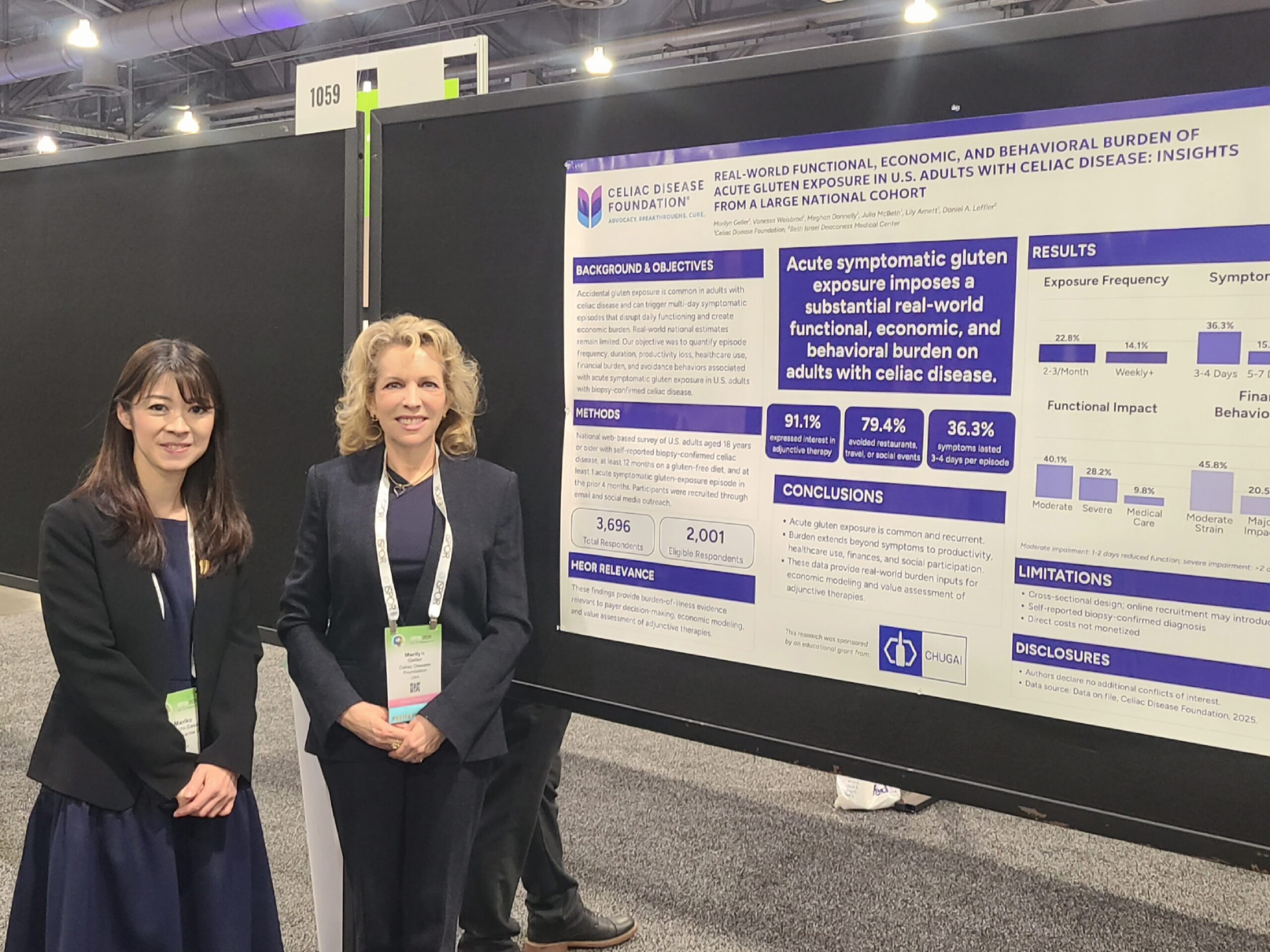
Marilyn Geller (Celiac Disease Foundation, and Mariko Noguchi Sasaki (Chugai)
With support from Chugai, the Celiac Disease Foundation designed and conducted a national survey of more than 2,000 U.S. adults with biopsy-confirmed celiac disease who had experienced a recent symptomatic gluten exposure.
The study quantified the disruption caused by accidental gluten exposure, including avoidance of restaurants, travel, and social events; symptoms lasting multiple days; reduced ability to work or care for family; and, for some patients, the need for medical care. More than 90% of participants expressed interest in an adjunctive therapy to help manage accidental gluten exposure.
This work was presented at Digestive Disease Week and at ISPOR, a leading global forum for health economics and outcomes research. This marks the first time celiac disease has been represented by a poster at ISPOR, an important milestone for the field and for the Celiac Disease Foundation’s work to bring patient experience into settings where burden, value, access, and reimbursement are evaluated.
For biopharma, this research provides data that can support treatment development and future payer conversations. For the field, it is an important step toward ensuring that celiac disease is understood as a serious autoimmune disease with measurable functional, social, and economic consequences.
Demonstrating the Limits of Diet Alone
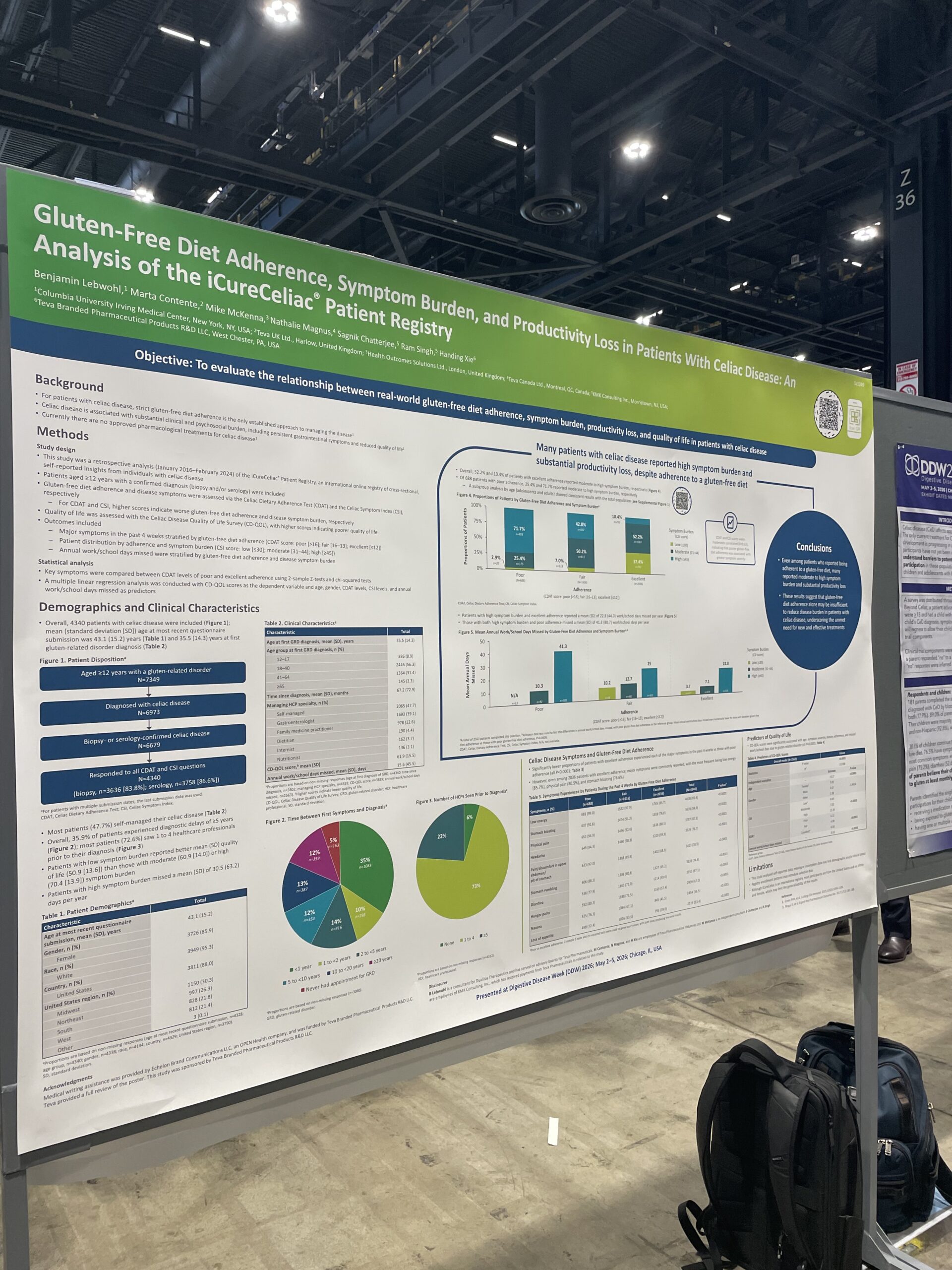
Teva and Columbia University Medical Center Poster
Using anonymized data from the Celiac Disease Foundation’s iCureCeliac® Patient Registry, researchers from Columbia University Celiac Disease Center and Teva analyzed the relationship between gluten-free diet adherence, symptom burden, productivity loss, and quality of life.
The findings showed that even among patients reporting excellent gluten-free diet adherence, a meaningful percentage continued to experience moderate-to-high symptom burden. Patients with higher symptom burden also reported missed work or school and lower quality of life.
This is the kind of real-world evidence the field needs. It demonstrates that the gluten-free diet, while essential, does not fully address the needs of all patients. It also reinforces the need for safe and effective adjunctive therapies.
The iCureCeliac® Patient Registry, with more than 18,000 participants across more than 90 countries, gives the Celiac Disease Foundation a powerful ability to help biopharma and researchers understand patient experience at scale.
Improving Clinical Trial Recruitment and Execution
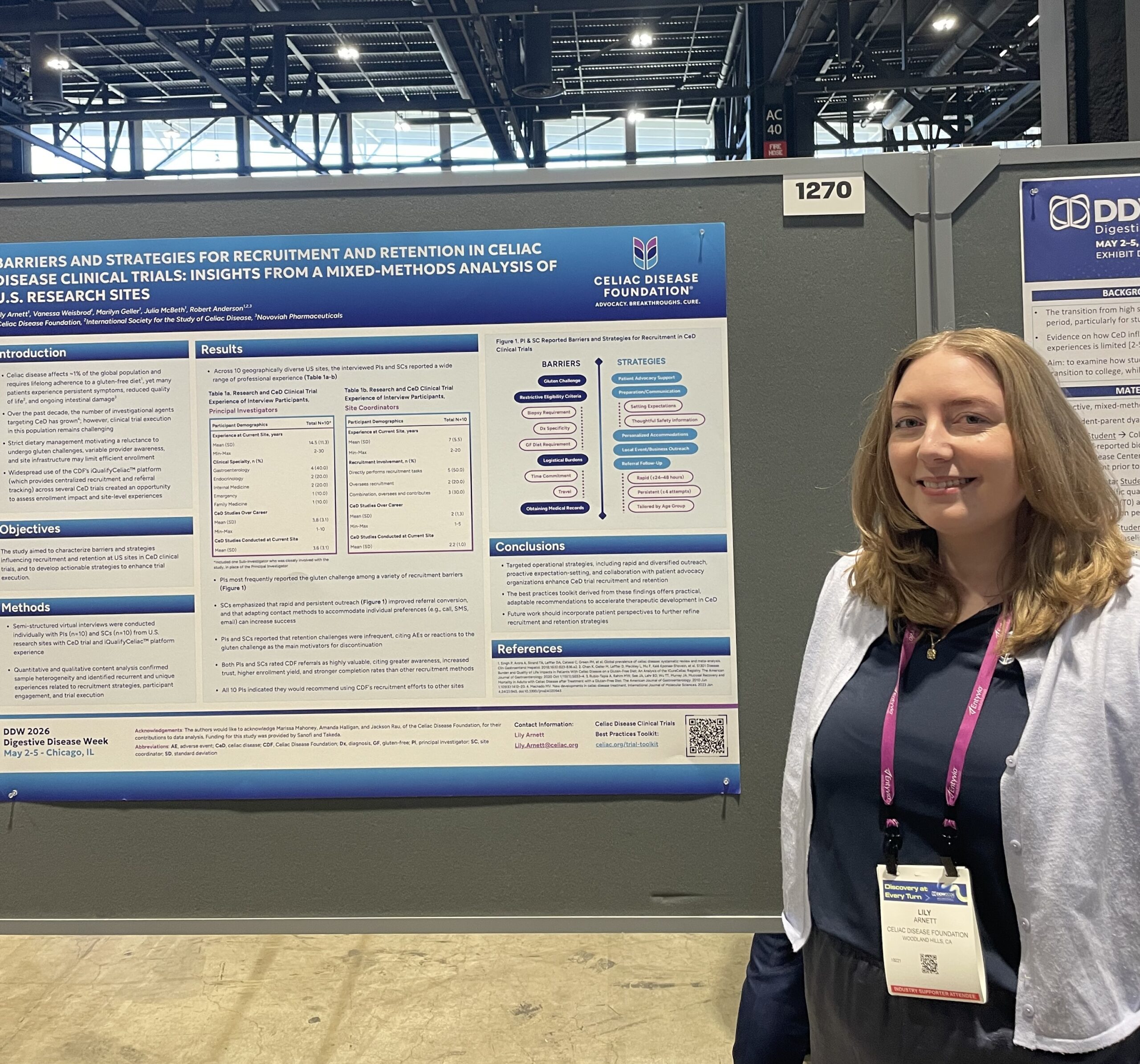
Lily Arnett, Celiac Disease Foundation
The third study, funded by Sanofi and Takeda, focused on one of the most important barriers to treatment development: making clinical trials work better for patients, sites, and trial sponsors.
Using performance data from the Celiac Disease Foundation’s iQualifyCeliac platform and interviews with principal investigators and site coordinators at 10 U.S. research sites, Celiac Disease Foundation researchers identified key recruitment and enrollment barriers. These included gluten challenge requirements, restrictive eligibility criteria, logistical burdens, and delays obtaining outside medical records.
The study also found that sites with faster referral follow-up and multiple outreach attempts had stronger enrollment conversion. Investigators and coordinators rated Celiac Disease Foundation referrals as the highest-quality recruitment source, describing referred patients as informed, motivated, and more likely to complete the trial process.
These findings informed the Celiac Disease Foundation’s Best Practices Toolkit for Celiac Disease Clinical Trials, a practical resource for sponsors, CROs, and research sites. The toolkit is available here: Best Practices Toolkit for Celiac Disease Clinical Trials
A Trusted Partner in Treatment Development
Across these studies, the message is clear: patient experience is a critical part of the evidence base in celiac disease research.
Biopharma sponsors are asking important questions. What burden do patients experience despite the gluten-free diet? What outcomes matter most? What keeps patients from enrolling in trials? What support do sites need to succeed?
The Celiac Disease Foundation is helping answer those questions.
Through the iCureCeliac® Patient Registry, iQualifyCeliac, patient surveys, advisory panels, site relationships, and global patient engagement, the Celiac Disease Foundation helps trial sponsors bring patient experience into research in ways that are rigorous, actionable, and scientifically meaningful.
We are grateful to our biopharma partners for investing in patient-centered research and for recognizing that the path to new treatments must be built with patients, not simply for them.
We are also deeply grateful to every patient who has joined the registry, completed a survey, considered a clinical trial, or shared their lived experience. Their participation is helping build the evidence base for future therapies.
Together, the Celiac Disease Foundation, patients, clinicians, researchers, trial sites, and biopharma partners are advancing the work needed to move celiac disease treatment development forward.
If you are not yet part of the iCureCeliac® Registry, join us at celiac.org/icureceliac.
Learn more about the Celiac Disease Foundation’s clinical trial recruitment and research support programs at iRecruitCeliac.org.