September is Hunger Action Month, a national campaign established by Feeding America in 2007 to raise awareness and inspire action to end hunger in America.
Food insecurity is a significant challenge for many families with celiac disease. Studies have shown that individuals with celiac disease are at a higher risk of experiencing food insecurity compared to the general population. According to a 2022 study 1 in 6 celiac patients are food insecure. Adhering to a strict gluten-free diet is the only current medical treatment for celiac disease. The additional cost of gluten-free foods, which can be up to 183% more expensive than their gluten-containing counterparts, is a major contributing factor to food insecurity risk in people with celiac disease. To address the unique struggles and increased prevalence of food insecurity within our community, the Celiac Disease Foundation developed the Celiac Disease Foundation Food Insecurity Resource Network (CD-FIRN).
Through partnerships with 35 hospitals across the United States, the CD-FIRN program provides monthly gluten-free food boxes to food insecure families living with celiac disease. These boxes are delivered directly to patients. The program is administered in partnership with the Food Equality Initiative.
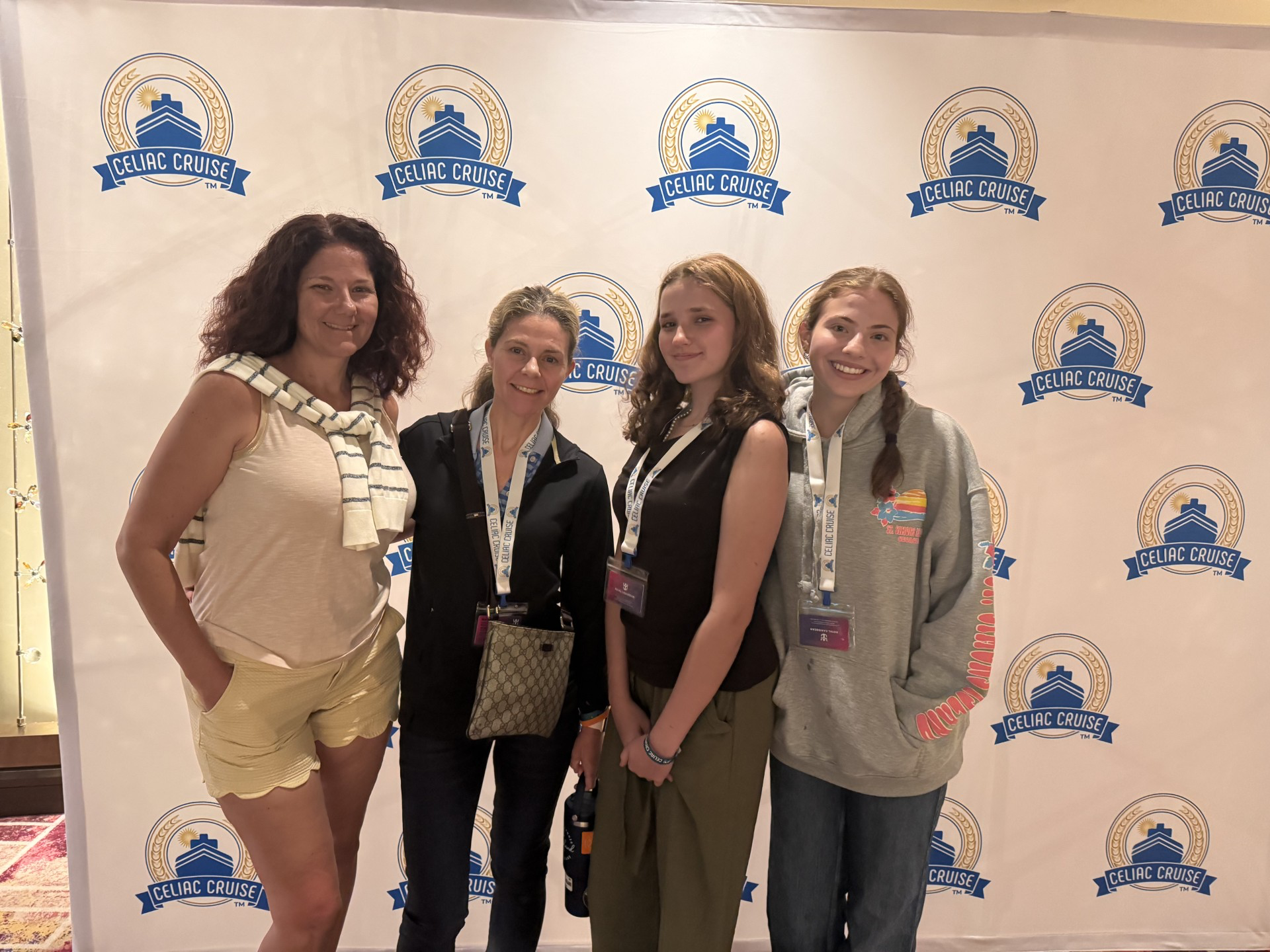
This September, in honor of Hunger Action Month, we met with teen advocate Riley to discuss her advocacy efforts for food insecure families with celiac disease in her home state of Arizona. As a result of her actions, the CD-FIRN program was able to expand to multiple sites in Arizona. In the interview below, Riley shares how a keynote presentation on a Celiac Cruise inspired her to take on this initiative.
Can you tell us a little about yourself and your connection to celiac disease?
I grew up in an Italian household that eats pasta four nights a week, so a celiac disease diagnosis at the age of 13 felt like the world turned upside down. Instead of having an exciting 8th grade year before high school, my compromised immune system and endless GI upset quickly consumed my life, establishing a routine of chronic pain, sick absences, and doctor’s appointments. My recovery took many years, and I still face the challenges of anxiety and social isolation from this condition.
When did you first learn about the CD-FIRN and want to get involved in your state?
This past July, my family and I attended our very first Celiac Cruise! Onboard, my mom and I attended a Keynote Presentation, where the guest speakers introduced the CD-FIRN program. I couldn’t help but grow upset over the lack of CD-FIRN sites in the southwest region. That’s when I knew I wanted to try expanding the accessibility to Arizonans.
Can you tell us how you went about this? Did you experience any hurdles or challenges while advocating for better resources for food insecure families with celiac disease at hospitals in your local area?
Truthfully, the process was not as complex as it appears. I called and emailed several adult and pediatric hospitals, including Phoenix Children’s Hospital and Banner Health Children’s Specialty. The dedication by the mighty Celiac Disease Foundation team made the first steps of connecting to local health providers quite manageable. I am so incredibly grateful for their assistance and information throughout this whole journey, as they provided endless support through answering all my questions and bridging the connection to health providers after the initial contact.
What did this experience teach you about advocacy that you think others should know?
This experience taught me the importance of action. While we all have our individual struggles, transforming such adversity into something that benefits others will always remain the most important step we choose to take. From my experience, resilience is not just about perseverance, but also finding the courage to rise above obstacles and take the risk to positively impact my community.
Learn more about the CD-FIRN program and our hospital partnerships here: https://celiac.org/foodinsecurityresources-hcp/
Have an inspiring advocacy experience you’d like to share? Reach out to our advocacy team at advocacy@celiac.org to share your story.