On May 13, the Celiac Disease Foundation hosted a legislative hearing gathering advocates, clinicians, lawmakers, families, and members of the celiac disease community at the Massachusetts State House to discuss the CAPE Act and the SNACCK Act. These two bills represent meaningful progress toward earlier celiac disease diagnoses and easier access to gluten-free meals at school for students in elementary school through college in the Commonwealth.
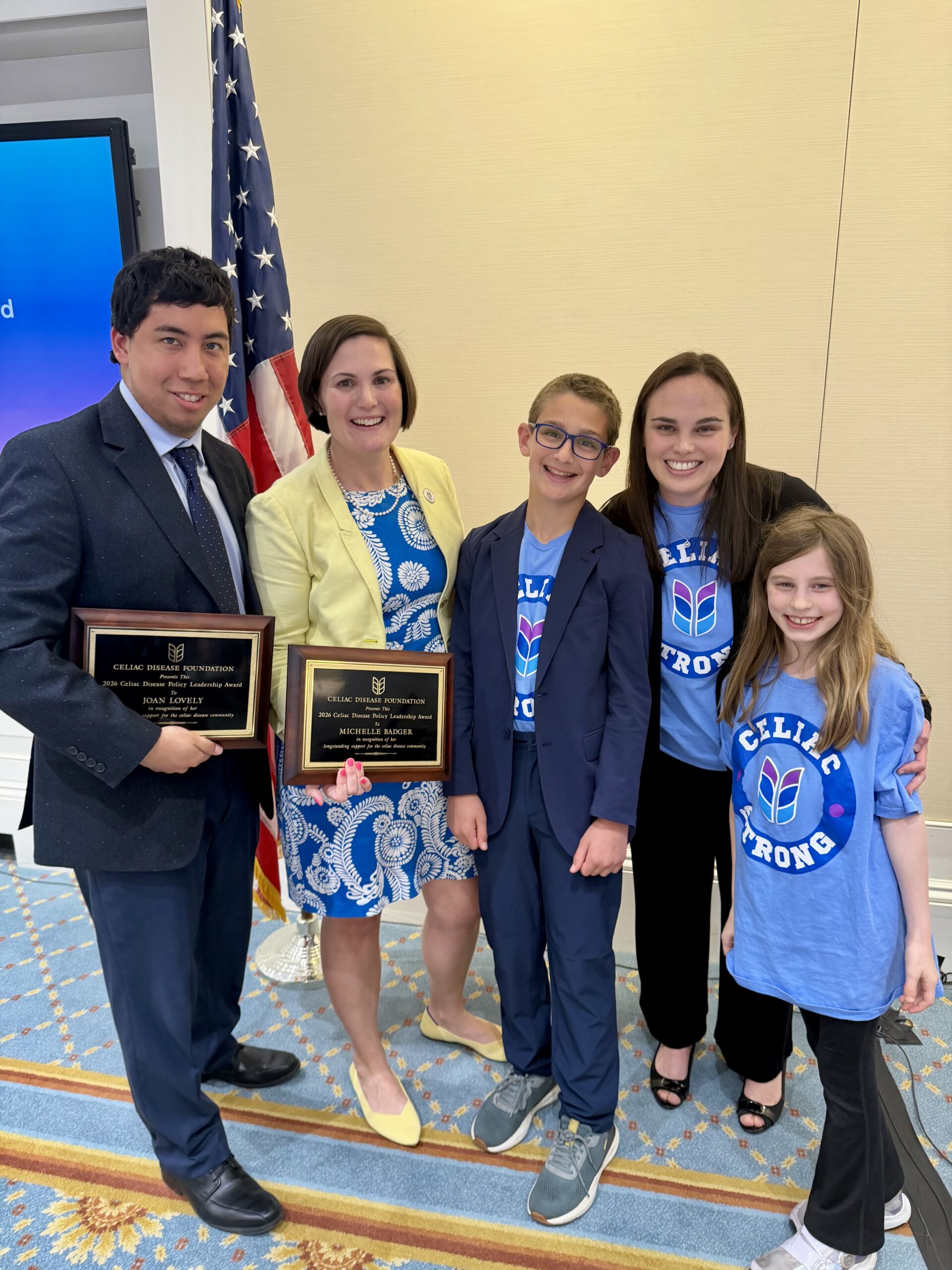
Jamie Nathan (representing Sen. Lovely), Rep. Michelle Badger, Brandon Weisbrod, Vanessa Weisbrod (Celiac Disease Foundation), Naomi Bilesimo-Koren
Honoring New Leaders
The Foundation was proud to present our annual Celiac Disease Policy Leadership Awards to Representative Michelle Badger and Senator Joan Lovely for their continued championing of our efforts in Massachusetts, including introducing the CAPE Act and SNACCK Act in both state chambers. This marks the first time that state legislators have received our Policy Leadership Award, a reflection of the groundbreaking nature of their work and their commitment to translating patient experiences into meaningful legislative action. Their leadership has elevated conversations around early diagnosis, equitable access to safe school meals, transparency in medically necessary dietary accommodations, and the long-term health impact of undiagnosed celiac disease.
Read about prior Celiac Disease Policy Leadership Award recipients here:
2025 recipient: Senator Richard Blumenthal
2024 recipient: Representative Betty McCollum
In her remarks, Representative Badger spoke about her personal connection to the celiac disease and the importance of listening to families navigating these challenges every day. She emphasized that the CAPE Act and SNACCK Act were developed through collaboration with patients, clinicians, researchers, educators, and advocates to ensure that policy solutions are rooted in both scientific evidence and lived experience. Senator Lovely echoed the importance of building a more inclusive and accessible school and healthcare environment for children and families across the Commonwealth.
Together, their leadership represents an important step toward creating a future where children with celiac disease can be diagnosed earlier, safely access school meals, and fully participatein everyday life without unnecessary barriers.
Transformative Legislation in the Commonwealth
The CAPE Act (H.5013/S.2928)
The Celiac Awareness and Pediatric Evaluation Act would establish a three-year pilot program to evaluate routine screening for celiac disease in children during existing cholesterol and lipid screenings at around age 12.
These screenings are already recommended to identify conditions such as familial hypercholesterolemia, a serious inherited disorder that affects approximately 1 in 300 children. Celiac disease, by comparison, affects an estimated 1 in 100 children, making it significantly more common than many of the conditions these routine blood draws are already designed to detect. Yet despite its prevalence, the majority of children with celiac disease remain undiagnosed, often for years.
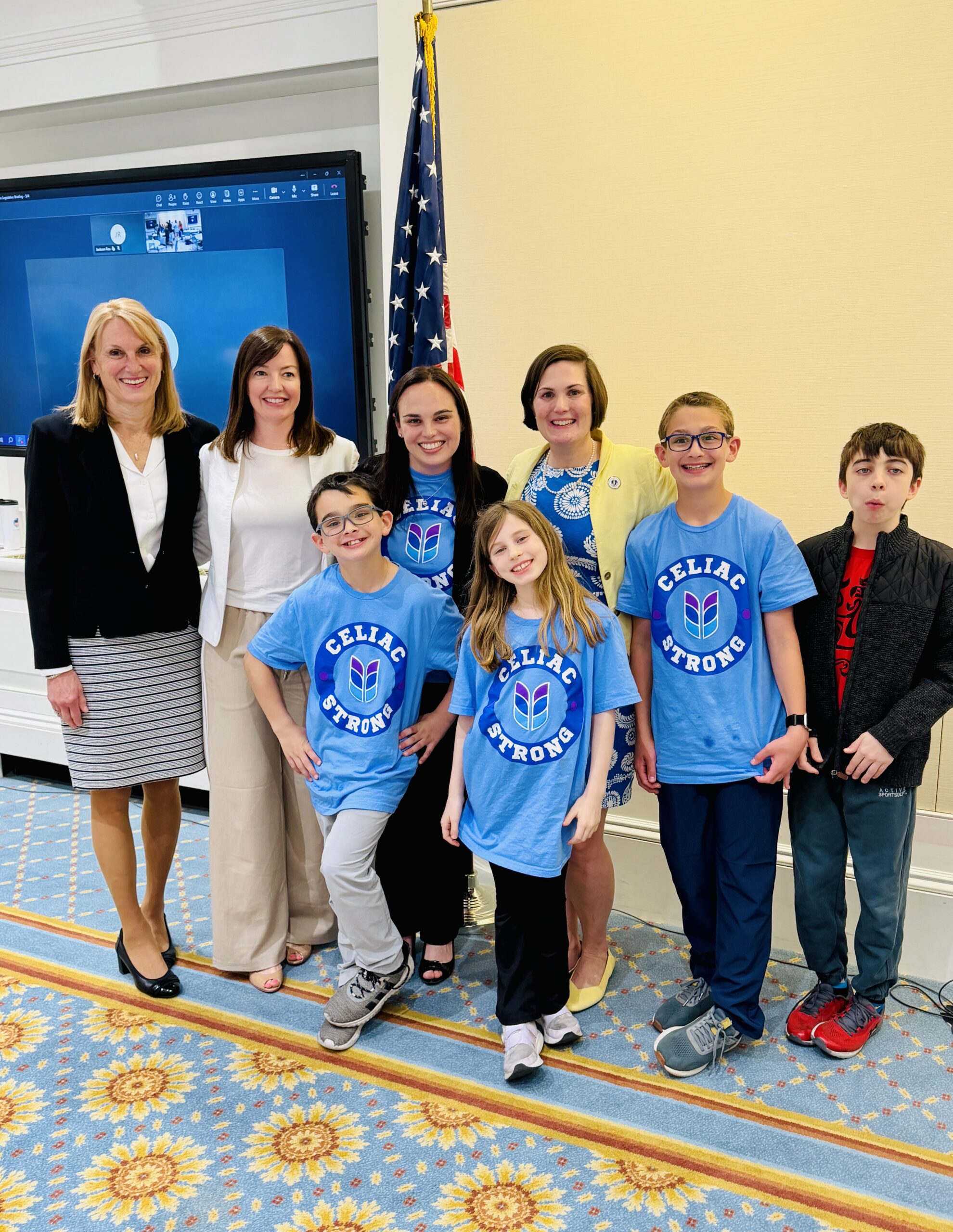
Sharon Weston, Maureen Leonard, Vanessa Weisbrod, Leo Weisbrod, Rep. Michelle Badger, Naomi Bilesimo-Koren, Brandon Weisbrod
The proposed bill responds to growing concern among gastroenterologists like Dr. Maureen Leonard, whose presentation emphasized that celiac disease is significantly underdiagnosed in children and frequently missed when symptoms are atypical, non-classical, or mistakenly attributed to other conditions. Delayed diagnosis can contribute to nutritional deficiencies, impaired growth, delayed puberty, bone disease, neurological complications, and significant impacts on mental health and quality of life.
By embedding screening into routine pediatric testing already taking place at age 12, the CAPE Act seeks to evaluate whether earlier identification could connect families to evidence-based care sooner while reducing the long-term burden of undiagnosed disease.
The SNACCK Act (H.5012/S.2927)
The Safe Nutrition, Allergen, and Celiac Communication for Kids Act would require Massachusetts schools to centrally post information online about allergen-free and gluten-free meal accommodations, including meal procedures, food safety protocols, menus, ingredient and nutrition information when available, and clear instructions for how families can access accommodations and communicate with school nutrition staff. The bill is designed to help families more easily understand whether their child can safely participate in school meals without needing to navigate inconsistent information across multiple websites, emails, or school offices.
Dietitian Sharon Weston from Boston Children’s Hospital highlighted the urgent need for this type of school support. Her presentation focused on food insecurity related to the gluten-free diet, including research on barriers families face when attempting to participate in school meal programs. Weston underscored the importance of school meals to ensure families have the support needed to adhere to the strict gluten-free diet required for celiac disease treatment. For families navigating medically necessary diets, increased transparency and communication make a profound difference.
Together, these bills reflect an increasingly recognized truth: celiac disease requires coordinated public health, education, and policy solutions.
From Missed Diagnoses to Meaningful Policy
After a formal reading of the bills by youth advocates Lyla Braga and Naomi Bilesimo-Koren, attendees heard from Vanessa Weisbrod, Chief Programs Officer of the Celiac Disease Foundation, who traced the pathway of years of clinical collaboration, family advocacy, and research that led to this moment.
Her presentation, “How We Got Here: From Missed Diagnoses to Meaningful Policy,”highlighted the real-world impact of delayed diagnosis and the challenges families face navigating healthcare systems and school environments not always equipped to support the medically necessary gluten-free diets that those with celiac disease need to thrive.
A Powerful Reminder of the Impact of These Bills
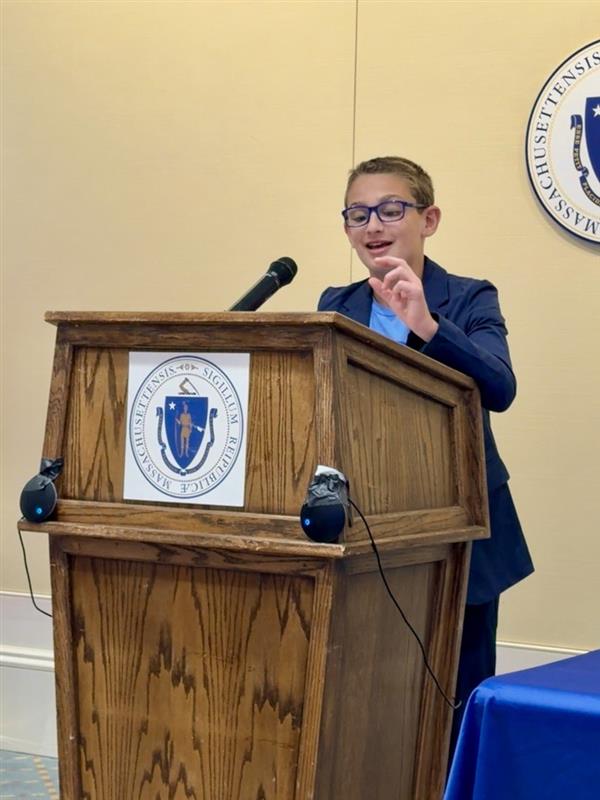
Brandon Weisbrod
One of the afternoon’s most memorable moments came when 12-year-old Brandon Weisbrod shared “Words from a Celiac Kid” and spoke about what these bills mean from a personal perspective.
His journey from challenging diagnosis and frustrating gluten exposures to scoring goals on the soccer field and enjoying school lunch with his friends in the cafeteria served as a powerful reminder: behind every statistic and policy discussion there are individuals and families navigating daily challenges, and children who deserve to safe access to food and to feel included at school.
Looking Ahead
The lively Q&A from elected officials, policy experts and constituents following the afternoon of presentations emphasized the importance of conversations like these between lawmakers, clinicians, patients, and families—these conversations make policy personal and build momentum toward a better future for the celiac disease community.
The May 13 State House briefing reflected a need to ensure individuals with celiac disease are diagnosed earlier, receive more effective support, and can eat safely in our public school system.
If enacted, the CAPE Act and SNACCK Act could help Massachusetts lead the way as a national leader in evidence-based celiac disease policy — improving early diagnosis while making school meal participation safer and more accessible for children who rely on medically necessary gluten-free diets.
Massachusetts residents, make your voices heard by asking your state legislators to co-sponsor both the CAPE Act and SNACCK Act. Contact your legislators here: https://celiac.org/masslegislation