 In a historic first, the North American Society for Pediatric Gastroenterology, Hepatology & Nutrition (NASPGHAN) dedicated an entire day to celiac disease at its 2025 Single Topic Symposium, “Clearing the Crumbs: Expert Insights into Celiac Disease.” This milestone event marked a moment of recognition for a condition that affects 1 in 100 children yet remains drastically underdiagnosed.
On November 5, leading doctors, scientists, dietitians, mental health experts, and patient advocates from around the world gathered for a full-day deep dive into the latest discoveries shaping celiac disease screening, diagnosis, treatment, and lifelong care. The symposium, led by Course Directors Temara Hajjat, MBBS (Cincinnati Children’s) and Maureen Leonard, MD, MMSc (MassGeneral for Children), reflected a major shift: celiac disease is finally getting the focused attention families have long waited for.
More than 350 providers attended, including general pediatric GI clinicians, dietitians, psychologists, and nurses who do not primarily work in designated celiac centers. Their participation reflects a growing commitment to broaden their expertise and strengthen clinical practice for the many patients with celiac disease seen outside specialty centers.
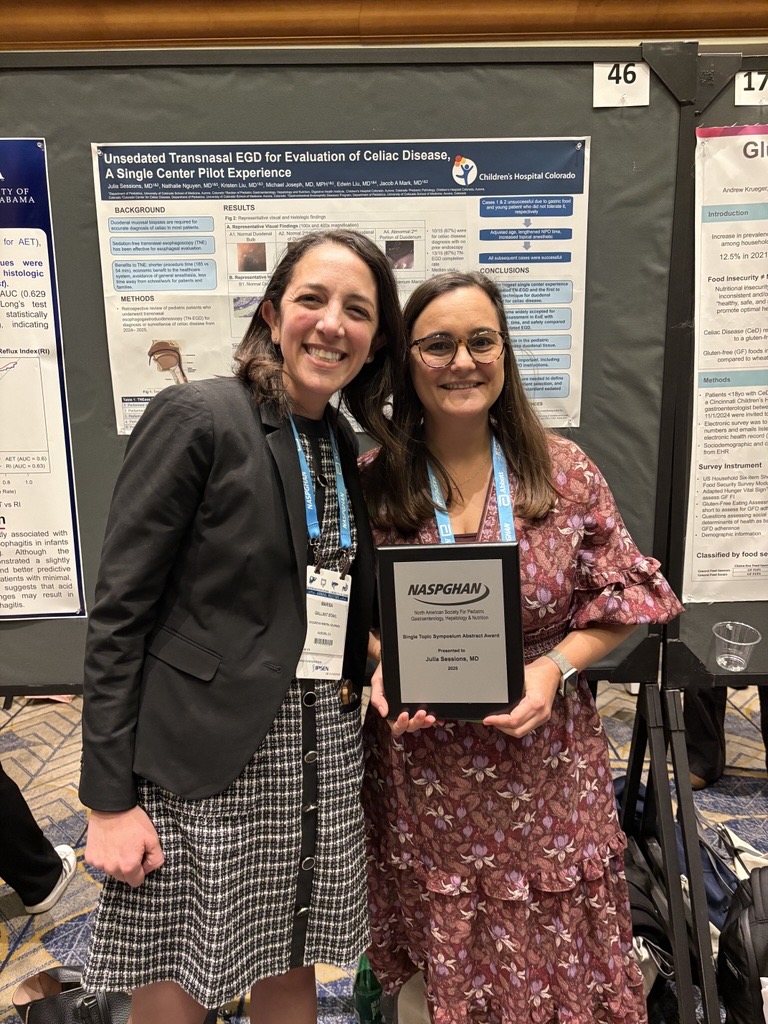
The Celiac Disease Foundation served as a major sponsor for the symposium, including awarding five abstract grants, highlighting its commitment to investing in the future of pediatric celiac disease research and clinical leadership.
Spotlight on Scientific Progress – Understanding the Global Burden
The opening session set the tone: Celiac disease is far more common and complex than many realize.
- Dr. Benjamin Lebwohl presented data confirming cases continue to climb worldwide, with children making up a substantial portion of new diagnoses. He also highlighted persistent disparities: children from communities of color and lower-income families are less likely to be tested and diagnosed, reinforcing the need for better, more equitable screening.
- Dr. Maureen Leonard explored what drives celiac disease. Spoiler: it’s not just genetics. Her talk unpacked how gluten exposure, viral infections, and differences in the gut microbiome all contribute to disease development and how cutting-edge prediction models may soon help identify at-risk kids before symptoms appear.
- Dr. Marisa Stahl shared practical guidance for pediatricians, noting that age matters when choosing screening strategies and that screening children with a family history or related autoimmune conditions like type 1 diabetes is essential. Her message was clear: we must find children earlier.
Toward More Confident Diagnosis
If there was one theme across Module 2, it was this: An accurate diagnosis builds the foundation for lifelong health.
The session covered:
- How and when to perform a gluten challenge before testing (Dr. Arunjot Singh)
- A spirited debate over whether the ESPGHAN criteria (the European standard for diagnosis) can replace biopsy for diagnosis (Dr. Edwin Liu and Dr. Dominica Gidrewicz)
- Real-world case examples illustrating what to do when labs, biopsies, and symptoms don’t align (Dr. Tracy Ediger)
The takeaway: diagnosis isn’t always straightforward but getting it right protects families from years of uncertainty and helps ensure they receive the surveillance and support they need.
New Frontiers in Research & Drug Development
 Module 3 offered hope that the gluten-free diet may not always be the only treatment option.
- Dr. Alberto Caminero discussed how changes in the gut microbiome can trigger—or protect against—celiac disease.
- Dr. Arnold Han decoded the complex conversation between gluten, genetics, and immune activation.
- Mayo Clinic’s Dr. Joseph Murray delivered a highly anticipated keynote on emerging drug therapies that could one day reduce—or even eliminate—the need for a strict gluten-free diet.
This session confirmed what many families have dreamed of. Real treatments are on the horizon.
Real-World Management After Diagnosis
A diagnosis is just the beginning. Module 4 tackled what comes next.
- Dietitian Jaclyn Quinlan walked through what families need to know about safe gluten-free eating including nutrition risks and labeling pitfalls.
- Dr. Dale Lee outlined what follow-up care should look like after diagnosis.
- Psychologist Dr. Shayna Coburn addressed the daily emotional toll of celiac disease, including anxiety, selective eating, burnout, and the pressure to constantly self-advocate. Her message resonated: Celiac care must care for the whole child not just their diet.
Hands-On Learning: Going Beyond the Clinic
Lunch was entirely gluten-free and interactive at the same time. The Foundation’s Chief Education & Community Engagement Officer, Vanessa Weisbrod, and Dr. Shayna Coburn (Children’s National Hospital) led a session titled: “Helping Your Patient Navigate a Gluten-Free Life with Confidence.”
This session reminded attendees that families need more than medical advice—they need real-world tools.
- Participants learned strategies to:
- Address stress and food insecurity
- Coach families on self-advocacy
- Support students in K–12 and college settings
- Understand reimbursement pathways for medical care and nutrition support
It was a powerful reminder that knowledge is only helpful when it’s accessible and that emotional, social, and financial support are just as critical as dietary guidance.
Innovations Driving the Future
Technology took center stage in Module 5:
- Dr. Catharine Walsh shared how clinical trials are evolving to measure what matters most to families: quality of life.
- Dr. Jocelyn Silvester walked through exciting updates on diet- and drug-based interventions, including enzymes and vaccines in development.
- Dr. Imad Absah showcased how artificial intelligence and digital tools are reshaping diagnosis, data tracking, and care delivery.
- Trainees also delivered short oral presentations on groundbreaking topics—from IL-2 biomarker development to environmental triggers and disparities in celiac outcomes.
 The Road Ahead
In the closing session, Dr. Ritu Verma painted a hopeful picture of what’s next. Better diagnostics. New treatments. Integrated care teams. Thoughtful policy. And a future in which every child with celiac disease receives equitable, expert care no matter where they live.
With strong collaboration among partners including the Celiac Disease Foundation, momentum is building toward an era in which prevention, early detection, and effective treatment become the norm.
Why This Matters
For millions of families, this moment represents something bigger than a conference.
It marks the first time NASPGHAN (the leading authority in pediatric digestive health) has formally recognized celiac disease with a full dedicated symposium. It signals that the medical community is taking celiac disease seriously, investing in scientific discovery, elevating care and quality of life, and building the next generation of experts.
Most importantly, it brings us closer to a world in which children with celiac disease don’t just manage their condition, they thrive. The crumbs are clearing.